Showing posts with label Church. Show all posts

Wednesday, September 15, 2010

Homophobia or Fear of the Different?

It is striking to see how some issues arouse discomfort in many people, especially when those who respond with anger are far from being actual victims, or even worse, are on the opposite side of the spectrum. The cases of gay marriage and adoption by gay couples will undoubtedly appear in the top spot on this scale.

Being homosexuality a common phenomenon throughout history, independent of the culture of the society, its level of economic development or prevailing religious beliefs, it is curious that many in the heterosexual majority have seemed right to make life miserable for those who do not share their sexual orientation. But sexual orientation is just one dimension of the problem; historically, blacks, women, Jews, Muslims, Gypsies and others have been the perfect excuse to pursue what seems to be what we really want: a society where everyone is exactly alike, meet the same standards, and where we are totally predictable. We want a society where everyone else is identical to ourselves.

In the case of homosexuality the exclusion ranges from the denial of the civil rights that heterosexual couples do enjoy, to consider it as a disease. It includes the public ridicule, persecution, and morbid processes of the so called "social cleansing". With a poor understanding of what the word democracy means, many homophobes hide behind the argument that heterosexuals, by being the majority, have the right to impose the social order they like and, therefore, to deny their rights to any minority, in this case gays ("you can't ask the majority to accommodate to open room for a few"). This argument does not take into accout the idea that in democracies citizens subject themselves to the democratic competition because they know that even when they are in the minority their rights will be respected. Our democratic homophobes seem to forget that detail, and thus they end up denying basic rights such as freedom to marry freely, to create a joint estate, inherit property upon the death of a mate, etc. That is, gays are not sent to be killed openly but instead are offered living conditions that seem to be aimed precisely at that.

Another position on the issue, which is often found, is the one of those who are comfortable "tolerating" homosexuality as long as they do not have to see a homosexual, to share with him/her, to have him/her as a neighbor, or any other act that would generate so uncomfortable nuisance. That is, they "accept" that homosexuals make their with their life whatever they want, as long as they do not engage with the rest of society. Later on I will go to other historical examples where people have thought in similar ways, but for now just think about the kind of society we would get if this were a principle that governed it and it were applied not only against gays but also against any minority.

But, anyway, if accepting homosexual marriage is for many a gigantic moral issue, what will be said of the adoption by homosexual couples? Then, the good father or mother within us finally awakes. Now the education of children becomes a great concern, along with their education, type of example they will receive from their parents, their future sexual orientation, etc. Since when, I wonder, so much interest in children for whom in any other context we would have not been interested at all? Why do not we care about the lives of children whose parents abuse them permanently? Why do not we worry about the example that children of criminals of the worst kind receive? Why do not we worry about the future of millions of children that go to bed every night without a meal? The reason is simple: because our real concern is not the children. They are just an excuse for us to get what really give us pleasure: excluding from our little world all of those who look different to us, and be content living in a uniform society, perfectly standard and totally predictable.

In that train of thought, gays, lesbians, bisexuals and trans-sexuals are also an excuse. Their sexual orientation, behavior, tastes, morals and so on, are not what really affect the rest. These people do not bother by what they are, but instead, they upset the rest by what they are not. By seeing in them something different, the majority feels uncomfortable and instead of accommodating them, asks them to cease existing or does whatever is possible for making it happen. They bother just for not being exactly like the rest.

But this is not the first case in history. As I said before, different groups have suffered exclusion from the dominant majority and we know the results this exclusion has brought: slavery, servitude, crusades, fascism and its various versions (like Hitler's in World War II or, not to go too far, Sarkozy's today.) In these cases and now the initial argument is a false tolerance with a number of limitations: special schools, limited rights, stigma, and so on. The next step is subjection to persecution and all kinds of indignities and even death.

The difference in the case of homosexuality is that the fear of the difference disguised homophobia has a powerful sponsor: the church, or rather, the churches. It is easy to see that many of the arguments against homosexuals have an important religious origin. In their supposed great wisdom the Bible and the Koran are totally opposed to homosexuality, which has served as grounds for homophobes in their rejection to any proposed civil advance in the rights of the gay community. But this does not seem obvious to many who claim that their homophobia is independent of religious principles. At this point it is worth citing Nietzsche when he resembles the Judeo-Christian morality to a poison that spreads throughout the body that is humanity. Once the moral is injected into society, the church is no longer necessary: the morality of the majority does the work, even if the church or religion are not mentioned in the matter.

Thus, the fear of difference supported by a religious morality is responsible for ruining the lives of people whose only difference is having a sexual orientation which is not the one of the majority. Is not sexuality a matter of each own and the duty of society to guarantee equality for all citizens? Are not there, perhaps, enough problems in the world like to be concerned about the existence of people who do not exactly follow the same model of life we have for us? It is time we realize that those uniform worlds where everybody think and behave like us will never exist, and then we will learn to accept each other in our differences.

Thursday, August 12, 2010

The Intellectuals Against the Pope,... And Justice For All

Next September, in the midst of a series of scandals that has surrounded the Catholic church over the last months, Benedict XVI will visit the UK in what has become an event full of clashes between Catholics and their opponents.

Some of the events that have generated controversy are the announcement of the entry fee to those attending the events officiated by the Pope and the reluctance of thousands of citizens to pay with their taxes the cost that the visit will mean to the British state, all this in the middle of the well-known scandals of pedophilia by clergy members. However, one of the events that has attracted most of the attention is the attempt of prestigious British intellectuals to generate an arrest warrant against the pontiff, in order to capture him once he steps on English soil.

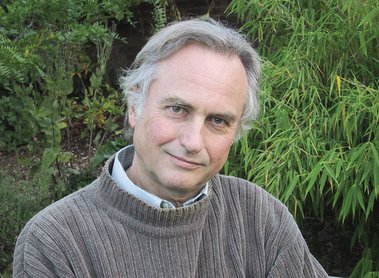
Richard Dawkins
The initiative is led by Christopher Hitchens, journalist and writer, author of the bestseller "God is not Great" and Richard Dawkins, evolutionary biologist, author of "The Selfish Gene", "The Blind Watchmaker" and "The God Delusion", among others. Last April, Hitchens and Dawkins began to consider the possibility of arresting the hierarch of the Catholic Church alleging crimes against humanity due to his concealment of repeated cases of child abuse by church ministers in the early eighties. During those years, today's Pope then known as the archbishop of Munich, was working as the leader of the Congregation for the Doctrine of the Faith -responsible, among others, for dealing with the cases of child abuse. Once again in 2001, being then known as Cardinal Ratzinger, he orders to cover up the cases of child abuse, arguing that it is essential to put the interests of the church over children safety. In an edict with his signature, the religious leader orders that in such cases, rather than taking the complaint to the respective authorities, the victims must be convinced to keep quiet about it.

Christopher Hitchens
According to this policy and before the scandals against Father Lawrence Murphy, who is accused of raping about 200 deaf children, Ratzinger ordered his transfer to another parish instead of allowing his immediate surrender to authorities. It has been revealed that this practice is part of the procedures ordered directly by the Vatican to deal with this type of crime (crimen sollicitationis) and has been carried out in countries as distant as Brazil, Ireland and the United States, as well as throughout the rest of the Catholic This means that the appointment of priests into new parishes occurs with the Archbishops knowledge about their past abuses of minors and, in many cases, facilitates the commission of further abuses in the parishes to where they were moved.

The legal procedures that would be conducted in the attempt to put the Pope behind bars would be similar to the one that led to the arrest of Augusto Pinochet as a result of the human rights violations that occurred during the Chilean dictatorship between 1973 and 1989. When Pinochet visited Britain in 1998 he was captured by the British authorities in response to an extradition request by the Spanish judge Baltasar Garzon on charges of crimes against humanity. However, as expected in the case of Benedict XVI, the Catholic community in various parts of the world has responded negatively to this initiative and has joined forces to block the progress of the arrest warrant against him. In fact, last week the British government in the voice of the new attorney general, Ken Clarke, spoke out against the move saying that it would not allow to arrest the Pope, which would require amending the law that in the past allowed Chilean dictator's capture.

Benedict XVI

This official position has also generated a strong response from the victims of the crimes committed by the church and many other organizations, in what they called "the protection of abusers by the British government". After this,  the legal battle to generate an arrest warrant against the Pope continues and the issue of the "exceptionability" of Catholic leaders is debated in several media (See article or video). Geoffrey Robertson, a prominent lawyer in human rights issues and United Nations legal expert, who is in charge of the case, relies on the possibility of launching a civil action against the Pope or, failing that, taking the case to the International Criminal Court. According to the plaintiffs, the Pope would not have diplomatic immunity and although the trip is considered a state visit, the Vatican is not an independent state recognized by the United Nations.
This situation contrasts with the decision of the Supreme Court of the United States just over a month ago, in its rejecting the invulnerability of the priests responsible for sexual abuse of minors in its territory. The treatment they have received in recent years has forced several of them to seek asylum in the Vatican or other places where justice can not reach them.

Beyond issues related to religious beliefs or doctrines of faith, the topic of the persecution of members of the church responsible for commission or concealment of these crimes must be part of the public discussion. For hundreds of years Western societies and their descendants have given the fight for the separation of church and state. Not only does this imply the existence of a gap between different religions and nation states, but also that following the mandates of one  of these institutions does not exempt from being governed by the laws of the other. In other words, as well as in the eyes of the church a state leader can be considered a sinner and therefore be condemned to hell (if those are their laws), according to the civil law a leader of the church can be considered a criminal, and thus be sent to prison.

Additionally, other major battles that history has given are those for equality before the law. This equality must be for all and in no way it excludes a group of individuals for the sheer fact of being in a high post in a religious institution. Again, beyond beliefs and dogmas, the principles of separation of church and state and equality before the law, force us to take firm actions in these cases of abuse of minors by members of the clergy and the cover-up by the Pope.

Now, it would be a good example of justice to act here as a sign of respect for the victims of these violations since to them, ultimately, it is not that they feel better by being abused by a priest than by any other human: therefore the treatment should be exactly the same to the one that any other rapist or any other person acting on its cover-up would receive. Similarly, for the followers of the Catholic faith this would be an important sign for their institution to ensure that this does not remain being a haven for pedophiles.

As it is acknowledged by Dawkins, perhaps the goal of capturing the Pope is unfeasible (although there are clearly some people working to make it happen), but this does not take away any value to the initiative. On the contrary, it sets a precedent against future abuses by religious leaders while letting them know that their roles as ministers of the church do not grant them a status beyond the reach of civil justice: sooner or later the public will be mobilized against them. On the other hand, this warrant has been translated in an argument that has served to awaken the collective consciousness towards the problem, as it has been expressed in the pressures from different sectors of the society demanding the resignation of the Pope, and as will be evident next month with the many protests against him. These are already being organized and will accompany his visit in different British cities.

But perhaps the most important aspect of this attempt to arrest the Pope is the reminding of the public that the church is not an authority on moral issues and, therefore, it is necessary to reach secular agreements on the moral principles that will rule society. Let us remember that history is full of crimes committed in the name of the gods like the Crusades, witch-hunting, the destruction of Aboriginal societies to impose the "true god" and discrimination against those with different sexual alternative to those accepted by these gods, among many others. In this scenario, the repeated cases of child abuse and the covering behavior of high hierarchs in this matter may become the straw that breaks the camel's back. Most likely all these people  physically and psychologically attacked on religious grounds will find a better society in a scenario where the idea of separation between church and state is truly taken into account. Then we can speak of justice for all.