Next September, in the midst of a series of scandals that has surrounded the Catholic church over the last months, Benedict XVI will visit the UK in what has become an event full of clashes between Catholics and their opponents.
Some of the events that have generated controversy are the announcement of the
entry fee to those attending the events officiated by the Pope and the
reluctance of thousands of citizens to pay with their taxes the cost that the visit will mean to the British state, all this in the middle of the well-known scandals of pedophilia by clergy members. However, one of the events that has attracted most of the attention is the attempt of prestigious British intellectuals to generate an
arrest warrant against the pontiff, in order to capture him once he steps on English soil.
 |
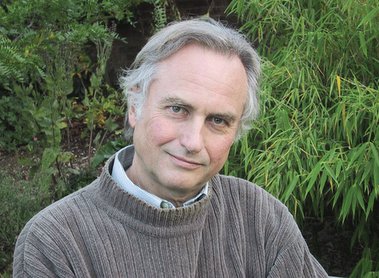
| Richard Dawkins |
The initiative is led by Christopher Hitchens, journalist and writer, author of the bestseller "God is not Great" and Richard Dawkins, evolutionary biologist, author of "The Selfish Gene", "The Blind Watchmaker" and "The God Delusion", among others. Last April, Hitchens and Dawkins began to consider the possibility of arresting the hierarch of the Catholic Church alleging crimes against humanity due to his concealment of repeated cases of child abuse by church ministers in the early eighties. During those years, today's Pope then known as the archbishop of Munich, was working as the leader of the Congregation for the Doctrine of the Faith -responsible, among others, for dealing with the cases of child abuse. Once again in 2001, being then known as Cardinal Ratzinger, he orders to cover up the cases of child abuse, arguing that it is essential to put the interests of the church over children safety. In an edict with his signature, the religious leader orders that in such cases, rather than taking the complaint to the respective authorities, the victims must be convinced to keep quiet about it.
 |
| Christopher Hitchens |
According to this policy and before the scandals against
Father Lawrence Murphy, who is accused of raping about 200 deaf children, Ratzinger ordered his transfer to another parish instead of allowing his immediate surrender to authorities. It has been revealed that this practice is part of the procedures ordered directly by the Vatican to deal with this type of crime (
crimen sollicitationis) and has been carried out in countries as distant as Brazil, Ireland and the United States, as well as throughout the rest of the Catholic
This means that the appointment of priests into new parishes occurs with the Archbishops knowledge about their past abuses of minors and, in many cases, facilitates the commission of further abuses in the parishes to where they were moved.
The legal procedures that would be conducted in the attempt to put the Pope behind bars would be similar to the one that led to the arrest of Augusto Pinochet as a result of the human rights violations that occurred during the Chilean dictatorship between 1973 and 1989. When Pinochet visited Britain in 1998 he was captured by the British authorities in response to an extradition request by the Spanish judge Baltasar Garzon on charges of crimes against humanity. However, as expected in the case of Benedict XVI, the Catholic community in various parts of the world has responded negatively to this initiative and has joined forces to block the progress of the arrest warrant against him. In fact, last week the British government in the voice of the new attorney general, Ken Clarke, spoke out against the move saying that
it would not allow to arrest the Pope, which would require amending the law that in the past allowed Chilean dictator's capture.
 |
| Benedict XVI |
This official position has also generated a strong response from the victims of the crimes committed by the church and many other organizations, in what they called
"the protection of abusers by the British government". After this, the legal battle to generate an arrest warrant against the Pope continues and the issue of the "exceptionability" of Catholic leaders is debated in several media (See
article or
video). Geoffrey Robertson, a prominent lawyer in human rights issues and United Nations legal expert, who is in charge of the case, relies on the possibility of launching a civil action against the Pope or, failing that, taking the case to the International Criminal Court. According to the plaintiffs, the Pope would not have diplomatic immunity and although the trip is considered a state visit, the Vatican is not an independent state recognized by the United Nations.
This situation contrasts with the
decision of the Supreme Court of the United States just over a month ago, in its rejecting the invulnerability of the priests responsible for sexual abuse of minors in its territory. The treatment they have received in recent years has forced several of them to seek asylum in the Vatican or other places where justice can not reach them.
Beyond issues related to religious beliefs or doctrines of faith, the topic of the persecution of members of the church responsible for commission or concealment of these crimes must be part of the public discussion. For hundreds of years Western societies and their descendants have given the fight for the separation of church and state. Not only does this imply the existence of a gap between different religions and nation states, but also that following the mandates of one of these institutions does not exempt from being governed by the laws of the other. In other words, as well as in the eyes of the church a state leader can be considered a sinner and therefore be condemned to hell (if those are their laws), according to the civil law a leader of the church can be considered a criminal, and thus be sent to prison.
Additionally, other major battles that history has given are those for equality before the law. This equality must be for all and in no way it excludes a group of individuals for the sheer fact of being in a high post in a religious institution. Again, beyond beliefs and dogmas, the principles of separation of church and state and equality before the law, force us to take firm actions in these cases of abuse of minors by members of the clergy and the cover-up by the Pope.
Now, it would be a good example of justice to act here as a sign of respect for the victims of these violations since to them, ultimately, it is not that they feel better by being abused by a priest than by any other human: therefore the treatment should be exactly the same to the one that any other rapist or any other person acting on its cover-up would receive. Similarly, for the followers of the Catholic faith this would be an important sign for their institution to ensure that this does not remain being a haven for pedophiles.
As it is acknowledged by Dawkins, perhaps the goal of capturing the Pope is unfeasible (although there are clearly some people working to make it happen), but this does not take away any value to the initiative. On the contrary, it sets a precedent against future abuses by religious leaders while letting them know that their roles as ministers of the church do not grant them a status beyond the reach of civil justice: sooner or later the public will be mobilized against them. On the other hand, this warrant has been translated in an argument that has served to awaken the collective consciousness towards the problem, as it has been expressed in the pressures from different sectors of the society demanding the
resignation of the Pope, and as will be evident next month with the many protests against him. These are
already being organized and will accompany his visit in different British cities.
But perhaps the most important aspect of this attempt to arrest the Pope is the reminding of the public that the church is not an authority on moral issues and, therefore, it is necessary to reach secular agreements on the moral principles that will rule society. Let us remember that history is full of crimes committed in the name of the gods like the Crusades, witch-hunting, the destruction of Aboriginal societies to impose the "true god" and discrimination against those with different sexual alternative to those accepted by these gods, among many others. In this scenario, the repeated cases of child abuse and the covering behavior of high hierarchs in this matter may become the straw that breaks the camel's back. Most likely all these people physically and psychologically attacked on religious grounds will find a better society in a scenario where the idea of separation between church and state is truly taken into account. Then we can speak of justice for all.